SELECTED WORK · CASE STUDY ONE
The River Community Church
Multi-Campus Website + Digital Ministry Ecosystem
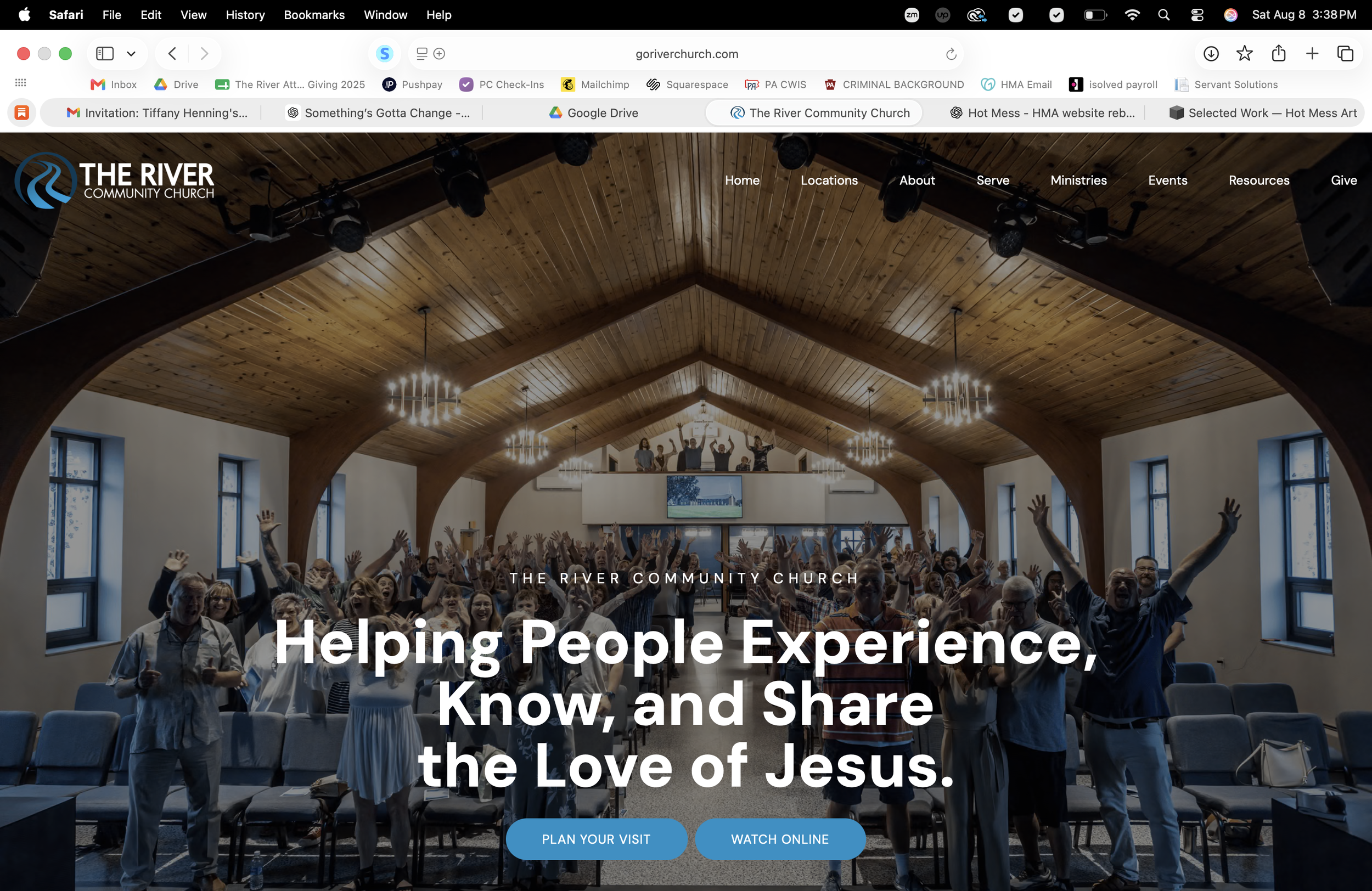
A website rebuild that grew into something much bigger: creating one clear digital home for two church campuses and connecting the website to the tools people actually use throughout the week.
THE PROJECT
It wasn't really just a website problem.
The River needed a website that could serve people who were showing up for very different reasons.
Someone visiting for the first time might only need to know when worship starts, where to park, or where their kids go. Someone already connected to the church might be looking for a group, an event, a registration, the directory, or something happening at their particular campus.
And underneath all of that was another challenge: The River is one church with two physical campuses in different communities.
The site had to make both campuses easy to understand without making them feel like two unrelated churches.
ONE CHURCH · TWO CAMPUSES
Shared identity. Clear local information.
I didn't want visitors to have to figure out whether a service time, ministry, or event applied to them.
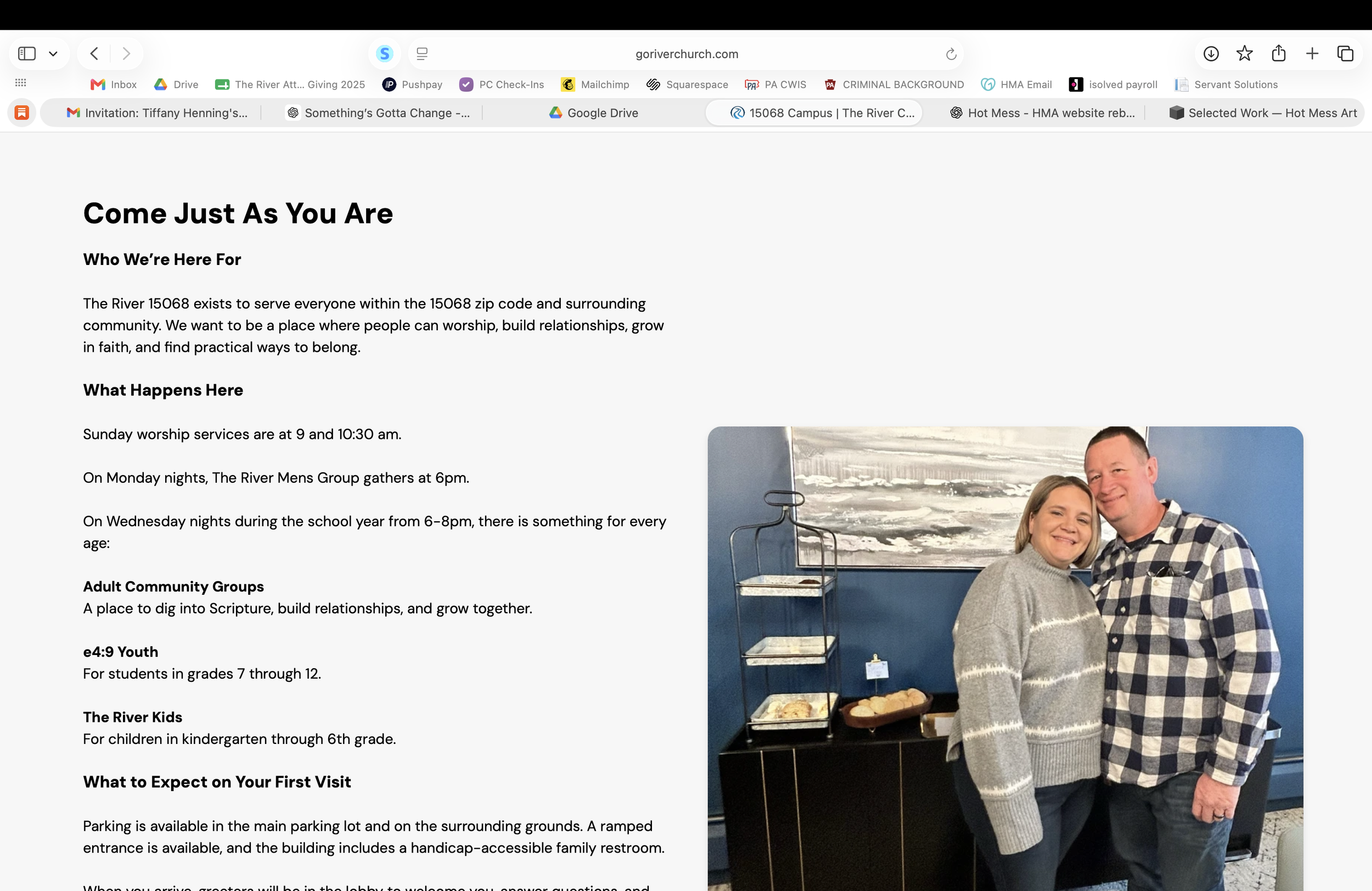
The site gives the 15068 and Franklin Park campuses their own clear pathways while keeping shared ministries, resources, giving, and church-wide information connected.
That sounds simple when you say it in one sentence. Getting the structure underneath it to actually make sense took a little more untangling.
THE FIRST-VISIT EXPERIENCE
Answer the questions people don't always want to ask out loud.
Church websites can accidentally assume everyone already knows how church works. I wanted the campus information to work for the person who doesn't.
Where do I go?
Service times, campus location, parking information, and a ramped entrance help people know what arrival will actually look like.
What about my kids?
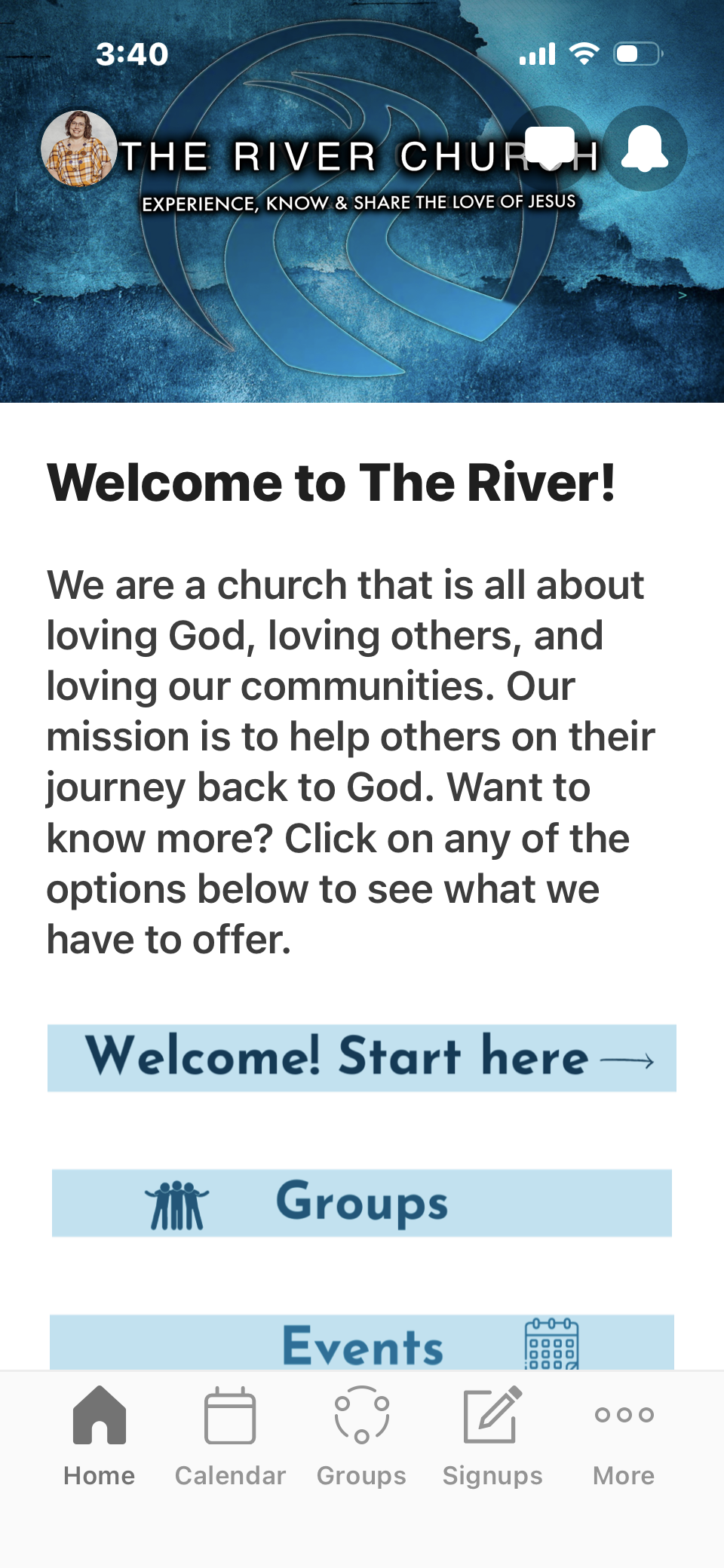
The River Kids ministry and nursery are on the lower level. Families can check in with volunteers, use the provided kiosks, or check in through the Church Center app.
Will someone help me?
Greeters are available in the lobby to answer questions and help new people find where they need to go.
What does it feel like?
Come as you are really means come as you are. Coffee and pastries are free in the café at the back of the sanctuary, ear plugs are available for anyone with hearing sensitivity, and Pastor Dean has been known to preach in a Steelers jersey on game day.
THE DIGITAL ECOSYSTEM
The website wasn't supposed to be another island.
The River was already using Planning Center. So instead of building a website that duplicated everything, I worked to connect the public site to the systems already supporting church life.
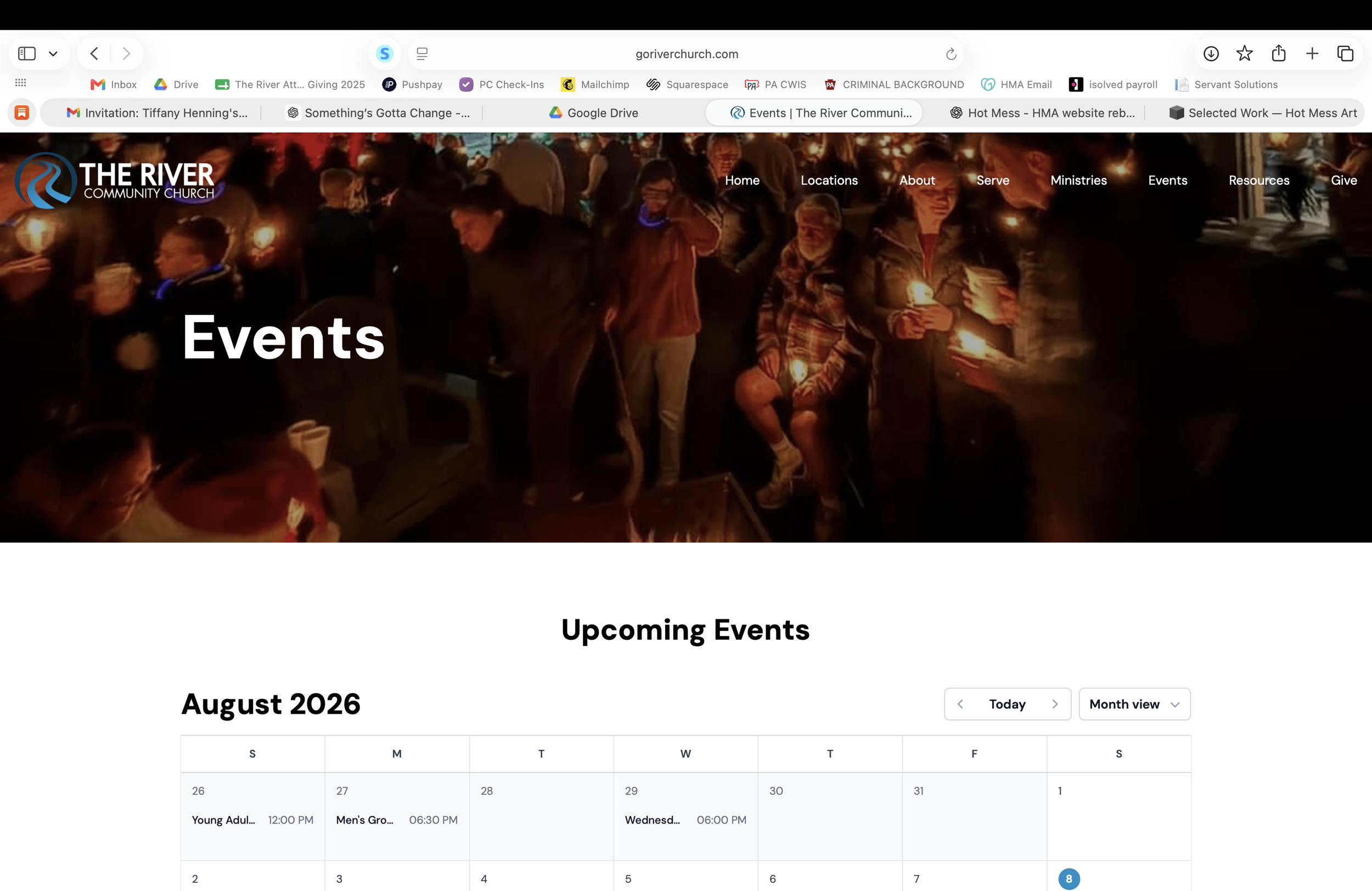
That included pathways into events, groups, registrations, the directory, family check-in, and the Church Center app.
CONNECTED IN PRACTICE
From website visit to actual participation.
CAMPUS-SPECIFIC CONTENT
A website should know where it lives.
The River 15068 exists to serve people within the 15068 zip code and the surrounding community, so its campus page needs to feel rooted there rather than reading like generic church copy.
During the school year, Wednesday nights include something for every age: adult community groups centered around Scripture and relationships, e4:9 Youth for students in grades 7–12, and The River Kids for students in K–6.
Those kinds of details matter because they help a website describe the actual life of a place instead of just describing the organization in broad terms.
WHAT I WORKED ON
The visible website and the stuff underneath it.
THE RESULT
Less hunting. More connecting.
The River's website now works as more than a place to post information.
A new visitor can figure out where to go and what to expect. Parents can find children's ministry information and check-in options. Someone looking for community can find groups. Members can move into events, registrations, directory access, and Church Center without having to understand how all of the systems work behind the scenes.
And that last part matters to me.
People shouldn't have to understand your systems in order to use them.
The goal wasn't to put everything on the website. It was to help people find what they needed and know what to do next.